
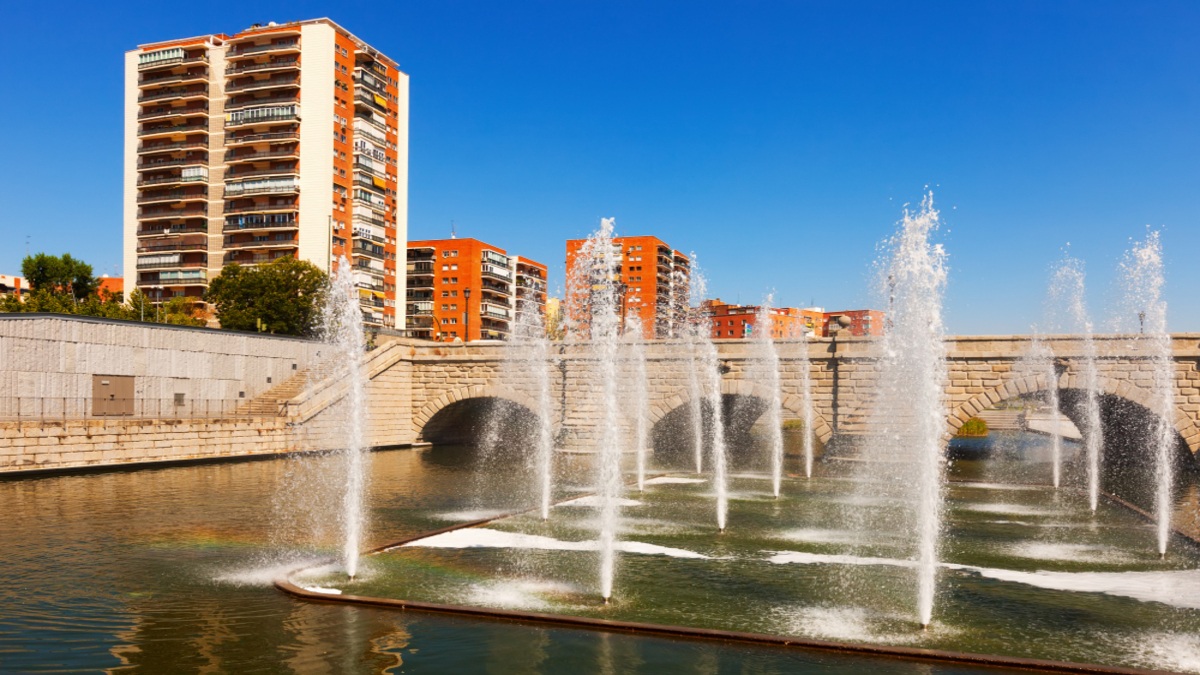
Madrid's real estate market is consolidating its position as one of the most dynamic and resilient in Spain. The Spanish capital is experiencing sustained demand, which continues to put pressure on prices, reaching record figures in some districts. In this article, we will analyze the historical evolution, the current situation by area, future prospects, and the smartest strategies for investing in the Madrid market.


Madrid, along with Barcelona, remains at the pinnacle of the Spanish real estate market. But while Barcelona showed certain signs of saturation and volatility in recent years, the Madrid market has demonstrated a more stable and consistent trajectory. In absolute terms, Madrid continues to lead, with an average price more than 30% higher than cities like Valencia or Seville.
The scarcity of buildable land and high construction costs have limited the supply of new developments, concentrating them in very specific, high-income districts. This has led to new housing prices per square meter being between 20% and 40% higher than second-hand properties in the same area.
Second-hand properties offer a much wider range of possibilities where buyers can find opportunities, especially in homes requiring renovation, located in neighborhoods undergoing transformation.
Factors affecting prices include sustained demand due to Madrid being a hub for employment, students, and international residents; scarcity of supply due to lack of land for new construction and the slow pace of new developments; rising material and construction costs due to inflation in the construction sectors; interest rates remaining at higher levels than during the era of cheap money (2010-2022), which curbs mortgage demand; and national and international investment, which continues to position Madrid as a safe haven asset for capital, through rental income and appreciation.
More affordable prices (under €3,500/m²) can be found in Villa de Vallecas, Villaverde, and San Blas-Canillejas, the districts that maintain the most moderate prices.
Central and most prestigious districts (Salamanca, Chamberí) have seen their prices remain at historic highs, showing notable resistance to downward trends. However, the greatest upward pressure is being recorded in peripheral and middle-class districts, such as Carabanchel, Usera, and Puente de Vallecas, where demand displaced by high prices in the city center is seeking alternatives.
You might also be interested in: Salamanca district real estate investment.
For buyers seeking a balance between price, services, and appreciation potential, several neighborhoods stand out as attractive options.
Aluche (Latina) is well-connected by metro and commuter trains, offering a wide range of shops and services, and still at affordable prices.
Numancia (Carabanchel) is undergoing a significant transformation, with new facilities and a young population. It offers good connectivity and contained prices.
Quintana (Ciudad Lineal) is a quiet residential neighborhood, with all services within reach and well-connected by Metro Line 5.
El Cañaveral (Vicálvaro) offers new housing at relatively accessible prices for the capital, ideal for families who prioritize space.
It depends on the investor's profile and their time horizon.
For rental properties, one can invest in neighborhoods with consolidated demand, in 2 or 3-bedroom apartments in districts like Arganzuela, Tetuán, or Moncloa-Aravaca, with secure medium-to-long-term appreciation.
For renovation, investing in emerging neighborhoods like Usera, Villaverde, or parts of Carabanchel offers significant immediate capital gains after refurbishment. This is a value-added strategy with high potential.
For new housing, in expansion areas like Valdebebas or Parque Darwin (Hortaleza), ensuring a high-quality asset with low maintenance costs and attractive to tenants with high purchasing power.
You might also be interested in: best neighborhoods in Madrid for investment.
The outlook for the remainder of 2026 points to stabilization with a slightly upward trend. Most forecasts agree that price growth will moderate, settling around 2-4% nationally, with Madrid exceeding that average.
Demand is expected to remain firm, although influenced by interest rate developments. A potential rate cut in late 2026 or early 2026 could provide a new boost to the mortgage market. However, the main drag will continue to be insufficient supply, which will prevent significant price drops in the capital.
Your strategy will vary depending on whether you're looking to rent long-term, renovate and sell, or acquire something for personal use in a few years. Long-term investment in established locations is the safest, while renovation in emerging neighborhoods offers higher returns but with more risk and effort.
Analyze specific data such as price trends over the last 5 years, municipal urban development plans, the arrival of new infrastructure (subways, commuter trains), the opening of shopping centers or offices for large companies – anything that generates appreciation.
With interest rates still high, ensure financing that doesn't create an excessive burden. A significant personal capital contribution (at least 30%) will give you much more peace of mind. Furthermore, in the current environment, there's room for negotiation, especially with private sellers and for properties that have been on the market for a long time.
Accessing the real estate market is no longer reserved for large investors alone. With Domoblock, the real estate investment platform, you can participate in real estate tokenization from just €200, expanding your portfolio with house flipping and building flipping projects that are solid and high-yield.
Blockchain innovation guarantees secure, traceable, and reliable operations. Furthermore, thanks to our experience in the real estate crowdfunding each investment offers over 10% annual returns and the possibility of recovering your capital in just 8 to 12 months.
Domoblock has various real estate investment projects in real estate investment in Madrid, real estate investment in Alicante, real estate investment in Zaragoza and real estate investment in Valencia. Check them out!
Domoblock allows you to transform small contributions into a real path towards financial freedom. It's time to jump into digital investment!
Salamanca, Chamberí, Retiro, Chamartín, and the Centro district (Barrio de Salamanca, Almagro, Jerónimos, Palacio, Justicia) have the city's highest prices, often exceeding 7,000 to 8,000 euros per square meter.
It depends on personal circumstances. With rental prices also at their peak, buying can be a more stable long-term option if you have the savings capacity for the initial outlay and can take on a mortgage. For short stays or without job stability, renting offers more flexibility.
According to Idealista, the average price per square meter in the city of Madrid exceeded €5,700/m², with very significant variations between districts.
Neighborhoods like Numancia (Carabanchel), Orcasitas (Usera), El Carmen (Villaverde), and Ambroz (San Blas) still have affordable prices and benefit from urban regeneration plans and the influx of new residents.
Rising interest rates make mortgages more expensive, reducing buyers' borrowing capacity and cooling demand in the entry-level market. This may slow the pace of price growth, but in a market with such rigid supply as Madrid's, the effect is more a moderation than a widespread decline.
Madrid's housing market is characterized by its strength and duality, serving as a financial haven in central districts and showing intense appreciation dynamics in the periphery and middle-class neighborhoods. Prospects indicate stabilization with moderate growth. By clearly defining your objectives and conducting detailed research on price history and projections, you can make the best possible investment.


.png)

León XIII, 27
Funded
-
-
Target
507.697,35 €


.png)
.png)
.png)
.png)



.avif)
.avif)
.avif)


